How To Make Your Own Sound Libraries
Building Sound Libraries That Actually Feel Professional
There’s a huge difference between recording a bunch of sounds… and creating an actual sound library.
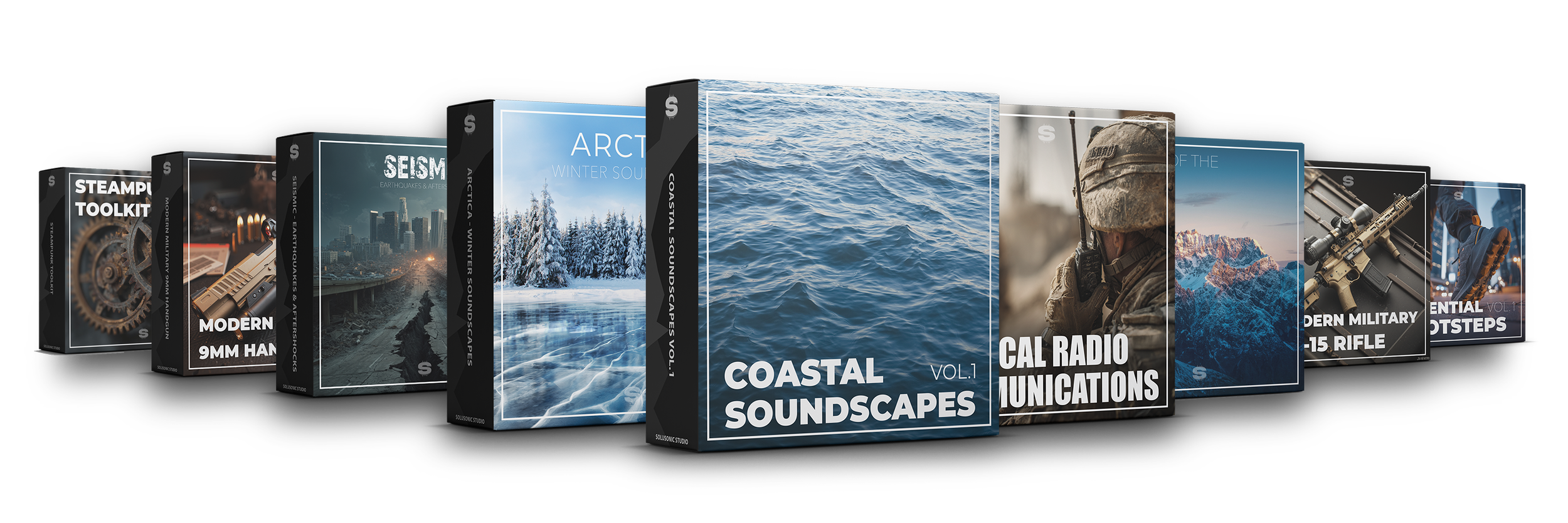
A lot of people get inspired, grab a recorder, start making sounds, and eventually end up with a hard drive full of random WAV files scattered across folders. Some recordings are great, some are terrible, some are overprocessed, some are barely organized, and somewhere along the way the entire project starts feeling directionless. That’s normal. Honestly, almost everybody starts there. The problem is that professional sound libraries are not just collections of sounds. They’re products. They’re tools built for specific people, specific workflows, and specific creative situations. The sounds themselves obviously matter, but organization, consistency, usability, metadata, structure, and planning matter just as much. At Solusonic Studio, we spend an enormous amount of time thinking about those details while creating libraries for film, games, post production, composers, trailer editors, and sound designers. So I wanted to put together a full breakdown of how we approach building sound libraries from the ground up, from the initial concept all the way to packaging and release. Not the “corporate LinkedIn audio entrepreneur” version either. The real version. The messy version. Because making a sound library is honestly a weird combination of creativity, technical organization, sound design, and asset management all smashed together. And if you skip the planning side of things, even incredible sounds can end up feeling amateur.
Start With A Strong Concept First
One of the biggest mistakes people make is starting production before they even fully understand what the library actually is. “I’m making cinematic sounds” is not really a concept. It’s way too broad. Same with things like “horror sounds” or “sci-fi sounds.” Those are genres, not identities. They don’t tell people what actually makes the library unique or why it exists in the first place. The strongest sound libraries usually have a very specific focus and personality to them. When somebody sees the title or hears the demo, they should immediately understand the direction of the pack and what kind of projects it was built for. Maybe it’s a gritty analog radio library full of tactical chatter, signal drops, static, and distorted transmissions. Maybe it’s a pack focused entirely on industrial machine textures recorded inside abandoned factories. Maybe it’s dark organic horror drones built from manipulated cello recordings and field recordings from forests at night. Those ideas immediately paint a picture in your head. They feel intentional. The point is clarity. The more focused the concept is, the easier literally every other step becomes afterward. Recording decisions become easier because you already know what belongs in the library and what doesn’t. Sound design becomes more cohesive because everything is being built around the same sonic identity. Folder organization becomes easier. Naming becomes easier. Metadata becomes easier. Even the demo reel becomes easier because the entire pack already has a clear tone and direction. A lot of newer creators think bigger automatically means better, so they try to cram every possible type of sound into one giant mega bundle. Usually the opposite happens. The library loses cohesion and starts feeling random, even if the individual sounds themselves are good. Smaller, more focused libraries often feel far more professional because they solve a very specific creative need. A well crafted radio texture library or industrial ambience pack will usually feel much more useful and memorable than a giant collection of unrelated sounds thrown together just to increase the file count. And honestly, limitations are usually good creatively. Having a focused direction forces you to go deeper into one idea instead of skimming across twenty different ones. That’s often where the best libraries come from.
Figure Out Who This Library Is Actually For
This part is incredibly important and honestly gets overlooked all the time. You need to think beyond, “Does this sound cool?” and start thinking, “Who is actually going to use this and why?” Film editors, game audio designers, trailer editors, post production engineers, composers, and content creators all work differently, and because of that, they need very different things from a sound library. For example, game audio designers often prefer cleaner and more flexible sounds with multiple variations because those assets may need to be triggered dynamically inside a game engine hundreds of times without sounding repetitive. A trailer editor, on the other hand, may want heavily processed cinematic sounds that already feel huge the second they drag them into a timeline. Meanwhile, somebody working in post production for film or television may care much more about realism, consistency, and clean recordings than aggressive sound design. The audience affects the production style way more than people realize. If you’re building a tactical radio library for military shooters or immersive film sound design, your approach will probably lean heavily into realism, layering, environmental texture, and believable imperfections. But if you’re designing futuristic cyberpunk UI sounds, the workflow may involve much more synthesis, modulation, tonal shaping, transient design, and precise processing. Even the way you organize and label the library can change depending on the audience. Some users prioritize fast searchability and clean metadata because they’re working under deadlines and need to find sounds quickly. Once you fully understand who the library is for, the entire project starts becoming much more intentional. Instead of randomly making sounds that “might be useful,” you start making production decisions that directly support the people who will actually use the library in real projects.
Plan The Structure Before Recording Anything
Honestly, this is one of the biggest differences between professional libraries and chaotic ones. Do not wait until the end of production to organize the library. If you do that, you’ll eventually open a folder containing 600 vaguely named files and realize you’ve created a nightmare for yourself. Instead, start designing the structure of the library before you even begin recording or designing sounds. The moment you settle on the concept, start brainstorming the major categories the pack will contain. If we continue using the example of a radio based library, you might begin mapping out sections like static textures, scanning tones, interference, tactical chatter, environmental radio beds, signal losses, emergency broadcasts, distorted voice fragments, and transition bursts. The moment you create those categories, something important happens psychologically. The project stops feeling abstract and starts feeling tangible. Now you’re no longer randomly making sounds whenever inspiration hits. You’re filling specific gaps inside a planned system. This also helps expose weak areas early. Maybe you realize you’re making far too many long ambient textures but barely any short transitional assets. Maybe the pack is overloaded with heavily distorted sounds but lacks cleaner material for layering. Planning categories early creates balance throughout the entire library. And honestly, organization itself becomes part of the product quality. Sound designers working under deadlines do not want to dig through chaos trying to find usable material.
Decide Whether This Is Primarily Field Recording, Sound Design, Or Both
Every library has a different production identity. Some libraries rely heavily on raw recordings and realism. Others are almost entirely synthetic and processed. Most modern cinematic libraries sit somewhere in between. But you should understand the core production philosophy before you begin because it changes your entire workflow. If the library is centered around field recording, your priorities may involve microphone choice, recording environments, dynamic detail, and capturing authentic textures cleanly. You might spend most of your time hunting for interesting locations, testing recording techniques, and minimizing unwanted noise. On the other hand, a heavily designed cinematic library may involve resampling, granular processing, pitch manipulation, distortion chains, layering, synthesis, convolution, and endless experimentation inside the DAW. Neither approach is more “correct.” They simply serve different creative goals. A realistic documentary ambience library should not be processed the same way as an aggressive sci-fi trailer pack. One values authenticity and transparency. The other may intentionally push sounds far beyond realism. The important thing is consistency. Whatever direction you choose, commit to it fully so the pack feels cohesive from beginning to end.
Think About Sample Rate Early
This is one of those things people ignore until halfway through production when they suddenly realize they probably should have planned it better. The sample rate you choose affects the flexibility of the library later, especially for cinematic sound design. Higher sample rates like 96kHz or 192kHz are incredibly useful when sounds are going to be stretched, pitched down aggressively, layered into creature vocals, or transformed heavily during post processing. Recording at higher resolutions preserves detail and helps avoid artifacts when manipulating audio dramatically. But not every library necessarily needs ultra high sample rates either. Some projects prioritize efficiency, manageable file sizes, or lightweight implementation inside game engines and editing workflows. The correct choice depends entirely on how the sounds are expected to be used. The important part is consistency. Once you establish the technical standards for the pack, maintain them throughout production. Random mismatched formats and inconsistent specifications immediately make a library feel less professional.
During Production, Stop Jumping Randomly Between Tasks
This is probably one of the biggest workflow mistakes I see constantly when people start building sound libraries. They work in completely random bursts with no real structure or direction. One hour they’re designing impacts, then suddenly they start recording cloth movement, then they move into drones, then they spend twenty minutes renaming files before getting distracted by another idea entirely. Eventually the whole project starts feeling fragmented and exhausting because nothing is being developed cohesively. Instead of building a library intentionally, it turns into a pile of disconnected experiments spread across dozens of folders. A much better approach is working in focused production phases. Spend dedicated sessions focused entirely on one category at a time. Maybe one day is purely radio static and interference textures. Another session is only transition bursts and signal drops. Another is dedicated completely to tactical voice processing and radio chatter. Then maybe another day is spent entirely organizing metadata, renaming files, and cleaning up exports. This creates far better consistency because your ears stay locked into the same sonic mindset for extended periods of time. The sounds naturally start feeling related to each other because they were created with the same energy, processing style, and creative direction. Instead of sounding like disconnected ideas made weeks apart, the library starts developing an actual identity. Working this way also makes it much easier to notice weaknesses or gaps in the pack. When you’re focused on one category for several hours, patterns become obvious. You might realize you have plenty of long textures but not enough short assets, or maybe everything is too distorted and you need cleaner variations for layering. Professional sound libraries rarely happen by accident. They’re usually the result of focused, organized production over time, where every category is being developed intentionally instead of randomly.
Test The Library Like A Real User
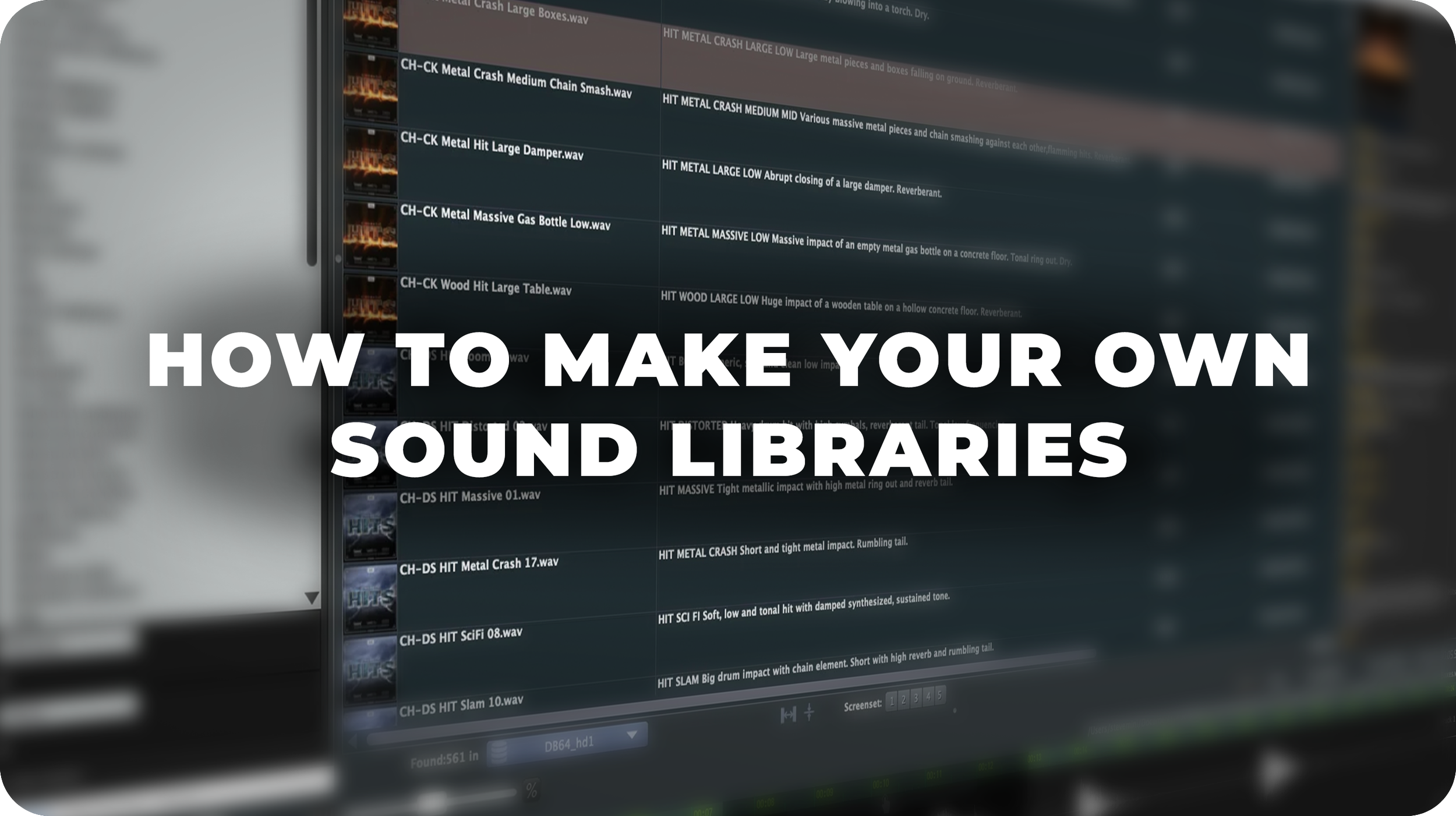
This step gets skipped constantly, and honestly, it shows. A lot of creators finish exporting their files and immediately upload the library for sale without ever testing what it actually feels like to use in a real workflow. They focus entirely on the sounds themselves but never think about the user experience of navigating the pack. Before releasing anything, you should spend time using the library exactly the way your audience would. Open it inside your DAW. Browse it through Soundminer or BaseHead. Drag sounds into timelines. Search keywords and metadata. Pretend you’re a stressed editor on a deadline trying to find a very specific texture quickly. You’ll usually notice problems almost immediately. Sometimes the sounds themselves are fantastic, but the overall experience becomes frustrating because the naming is inconsistent, categories feel confusing, metadata is incomplete, or the pack is bloated with filler sounds that don’t really need to be there. Maybe certain sounds are difficult to locate, or maybe the folder structure makes sense to you as the creator but feels unintuitive to everyone else. Those details matter way more than people realize. A professionally made library should feel smooth and efficient to navigate. Users should be able to move through categories naturally, understand filenames quickly, and find what they need without digging through chaos for ten minutes. The smoother the workflow feels for the user, the more valuable the library becomes professionally. People remember friction, especially when they’re working under deadlines. But they also remember when a library simply feels intuitive, organized, and fast to work with. That usability becomes part of the product quality itself.
Naming And Metadata Matter More Than Most People Realize
This is probably the least exciting part of sound library creation, but honestly, it’s one of the most important. You can create incredible sounding assets, but if the naming is messy or the metadata is incomplete, the library instantly becomes harder and more frustrating to use. Bad naming slows people down. Good naming makes the library searchable, understandable, and fast to navigate. Your filenames should be descriptive enough that somebody can quickly understand what the sound is without even previewing it, but not so overcomplicated that they become impossible to scan quickly. Consistency matters just as much as the actual wording itself. If one file is named cleanly and another looks like:
weirdsound_FINAL_v7_NEW.wav
the library immediately starts feeling disorganized and amateur. A professional naming structure should feel standardized across the entire pack. For example, we usually structure our filenames something like:
NATDQuak_Large Earthquake 01_SLSN_SE.wav
In this example, the file starts with the UCS compliant category abbreviation, followed by the actual descriptive sound name, then a shortened company identifier, and finally the abbreviation for the specific library the sound belongs to.
So in this case:
NATDQuakidentifies the UCS categoryLarge Earthquake 01describes the actual soundSLSNidentifies Solusonic StudioSEidentifies the Seismic library
This kind of structure is extremely common across larger professional sound effects companies because it keeps everything organized, searchable, and identifiable even when files end up mixed into massive databases alongside thousands of other libraries. A good naming system also helps users scan through sounds quickly, especially when they’re working under deadlines or searching through huge collections of assets. Even small things like consistent numbering, category labeling, and variation naming can make a massive difference in workflow. Metadata is equally important, especially if you want your libraries to feel professional inside industry-standard workflows. A lot of sound designers are no longer manually browsing folders anymore. They’re searching keywords inside databases using tools like Soundminer or BaseHead. That means metadata often becomes the primary way people interact with your library. If your files are tagged properly with accurate descriptions, categories, keywords, and UCS naming conventions, your sounds become dramatically easier to find and use. And when somebody can instantly search something like “radio static,” “metal impact,” or “dark tonal drone” and immediately pull up relevant assets, your library becomes much more valuable professionally. It’s not glamorous work, and honestly most creators would probably rather spend time designing sounds than organizing metadata. But this is one of the areas that genuinely separates professional sound libraries from amateur uploads. The smoother and faster your library feels to navigate, the more likely people are to keep coming back to it in real projects.
Finalizing The Library
Once the pack is mostly finished, it’s important to slow down and really review everything with fresh ears. This is the stage where the library stops being “a collection of sounds you made” and starts becoming an actual product. You go through and start removing weaker material that doesn’t hold up anymore. You check for clipping issues, inconsistencies in loudness, and any processing artifacts that slipped through during production. You fix metadata mistakes, clean up file naming, and make sure the exports are consistent across the entire library so nothing feels out of place when someone is browsing it. This step matters more than most people think because one mediocre sound can genuinely drag down the perceived quality of an entire pack. Even if 90 percent of the library is excellent, users will still notice the weak or unnecessary material. It breaks trust in the product in a subtle way. That’s why bigger is not automatically better. In fact, removing material can often improve the library more than adding to it. Cutting out 50 or even 100 weaker sounds can make the entire pack feel more premium because everything left is there for a reason. Each sound feels intentional, usable, and worth including. The goal here is not just volume or file count. The goal is trust. You want someone opening the library to feel confident that everything inside was carefully selected and curated, not just dumped together to make the pack look larger. When a library feels intentional like that, it becomes significantly more valuable in real production environments where people don’t have time to sort through unnecessary content.
Packaging And Selling The Library
Presentation matters far more than most people want to admit. Before anyone even hears a single sound, they’re already forming an opinion based on the artwork, branding, product page, and overall presentation of the library. That first impression is doing a lot of heavy lifting, especially in a market where people are constantly comparing multiple libraries side by side. A strong demo reel is one of the most important parts of this entire process because it communicates the identity of the library immediately. Within the first few seconds, someone should already understand the tone, energy, and creative direction of the pack. A good demo doesn’t just showcase individual sounds, it shows how those sounds behave in context. It should feel like a short piece of sound design on its own, not just a playlist of random assets. If the demo is done well, people instantly understand things like emotional tone, intensity range, flexibility, and production quality without needing to dig through every file. That clarity is what often drives the decision to buy. And honestly, good organization becomes part of the product at this stage too. Editors, sound designers, and composers are usually working under pressure. They’re not browsing libraries for fun, they’re trying to find something that works quickly and cleanly inside a deadline-driven workflow. So libraries that feel smooth to navigate, logically structured, properly tagged, and easy to search become genuinely valuable tools in that context. That usability ends up mattering just as much as the sounds themselves. In many cases, even more. A library can have amazing audio content, but if it feels slow or confusing to use, people will hesitate to come back to it in real projects. On the other hand, a well packaged library that feels fast, clear, and predictable becomes something people rely on again and again, because it saves time as much as it provides sound.
Final Thoughts
Making sound libraries professionally is a strange but really interesting mix of art and technical discipline. You’re not just recording or designing audio in isolation. You’re building a system. A workflow tool. A creative resource that other artists will rely on while they’re working on films, games, trailers, music, and all kinds of immersive media. And the biggest shift usually happens when you stop thinking in terms of, “I’m just making cool sounds” and start thinking more like, “I’m building a product that helps people work efficiently under real pressure” That change in mindset affects everything that follows. The sounds naturally become more focused because you’re no longer creating without direction. The organization becomes more intentional because you’re thinking about how someone else will navigate it, not just how it looks on your own drive. The workflow becomes cleaner because you’re building in structure instead of trying to fix it later. Even quality control becomes stricter, because every sound has to justify why it exists in the final product. Over time, that approach compounds. The library stops feeling like a random collection of WAV files sitting in folders and starts feeling like something designed with purpose. Something that fits into real production environments without friction. And that’s really the goal at the end of the day.